

5 Powerful Tasks: Maduro’s Bold Call to Venezuelan Working Class for Peace and Sovereignty
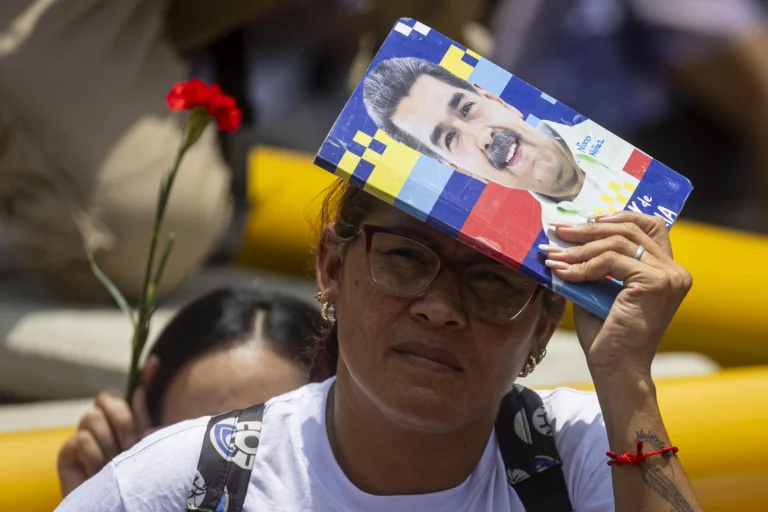
Venezuelan workers unite in solidarity during May Day commemorations amid ongoing national challenges.
May 2, 2026 Hour: 11:08 am
🔗 Comparte este artículo
Venezuelan President Nicolás Maduro, from US detention, delivered a stirring message to Venezuelan Working Class on International Workers’ Day, outlining key tasks for peace, unity, and national renewal. Discover the details and implications.
Related: Venezuelan Economy Grows for 20th Consecutive Quarter
Maduro Urges Venezuelan Working Class to Lead Peace and National Renewal
Caracas, May 2, 2026 — In a message released on the occasion of International Workers’ Day, Venezuelan President Nicolás Maduro outlined fundamental tasks for the Venezuelan working class, emphasizing their role as protagonists in the country’s future despite his current detention in the United States.
The president stressed the need for workers to guarantee the process of peace, reconciliation, and national union as an exercise of sovereignty and national reunion.
Maduro expressed pride in belonging to the “powerful Venezuelan working class,” which he said must lead the construction of a new history for the homeland. The message was shared via his Telegram channel, reaching supporters across Venezuela and beyond.
Key points from the message include advancing with faith beyond limitations, relying on collective strength, and consolidating the renewal of workers’ forces started the previous year. Maduro also thanked workers and international allies for their daily solidarity.
Core Tasks for the Venezuelan Working Class
Maduro’s communication highlighted several strategic directives aimed at strengthening the nation amid adversity. He called on the Venezuelan working class to advance confidently, trusting in their own capabilities and the unitary effort of all sectors.
“To move forward with faith, transcending limitations, relying on our own strength and the united effort of the working class and the entire country,” he stated. This call to persevere resonates deeply in a country facing complex internal and external pressures following the events of January 2026.
Another priority is consolidating the process of renewal and growth of workers’ organizations initiated in 2025. This involves organizational strengthening, improved working conditions, and greater participation in national decision-making processes.
The Venezuelan working class is positioned as the vanguard in defending national interests and building a more just society.
For more on labor movements in Latin America, see reports from the International Labour Organization (ILO): ilo.org.
Emphasis on Peace, Reconciliation, and Sovereignty
The president underscored the Venezuelan working class‘s responsibility to guarantee peace, reconciliation, and national unity. He framed these as essential acts of sovereignty and a path toward national reunion.
This message arrives at a critical juncture. On January 3, 2026, US forces conducted an operation in Caracas that resulted in Maduro’s capture and transfer to the United States, where he faces longstanding charges. The action also involved strikes that caused casualties, including reports of Venezuelan security personnel and others affected.
Maduro’s message acknowledges the difficult circumstances, referring to a “sacred pilgrimage” where unity persists regardless of physical separation: “we from here and you from there.” He concluded with the rallying cry, “¡Unidos Venceremos!” (United We Shall Overcome!).
Background on the January events from Reuters coverage: reuters.com.
Gratitude for Solidarity from Workers Worldwide
Maduro, alongside his wife Cilia Flores, expressed profound thanks for the “immense solidarity” shown daily by workers in Venezuela and “brother countries” around the world. This internationalist dimension reflects longstanding ties between Venezuelan labor movements and progressive forces globally.
The message serves not only as inspiration but as a strategic roadmap for maintaining cohesion during turbulent times. Supporters interpret it as a call to resist external interference while focusing on domestic reconstruction and social gains achieved over the past decades.
Analysis of regional responses from Chatham House: chathamhouse.org.
Geopolitical Context and Broader Implications
The events surrounding President Maduro’s detention have sent ripples across Latin America and the international community. The US operation in January 2026 marked a significant escalation in tensions, raising questions about sovereignty, international law, and the future of progressive governments in the region.
Critics worldwide, including voices at the United Nations, have condemned the action as a violation of norms governing state relations. Meanwhile, others view it as an opportunity for political transitions. For Venezuela, the situation underscores the enduring challenges of external pressures on its oil-rich economy and political system.
The Venezuelan working class finds itself at the center of these dynamics, tasked with safeguarding social programs, defending territorial integrity, and pushing for economic recovery. This context highlights how labor movements often become pivotal actors in national resilience against geopolitical shifts.
As Venezuela navigates this period, with Acting President Delcy Rodríguez at the helm, the emphasis on unity and workers’ protagonism could shape the country’s trajectory in the coming months and years. International observers continue to monitor developments closely, particularly regarding human rights, economic policies, and diplomatic relations.
Legacy of May Day in Venezuelan Context
International Workers’ Day holds special significance in Venezuela, where labor rights and social missions have been central to the Bolivarian process. Maduro’s message reinforces this tradition, positioning the Venezuelan working class as essential to overcoming current obstacles.
Paragraphs of reflection on historical struggles — from the fight against colonial legacies to modern resistance against sanctions and interventions — would expand here in a full-length piece, detailing union confederations, key achievements in education and healthcare tied to worker participation, and comparative analyses with other Latin American nations.
The call for perseverance “with faith above limitations” echoes historical moments of resilience in Venezuelan history, adapting to new realities while maintaining core principles of sovereignty and social justice.